Robert Crouse Construction takes on home renovations in Southampton, from Southampton Village and Water Mill out to Hampton Bays, Quogue and Westhampton Beach. Bob Crouse is a master carpenter with more than 40 years in the trade, and the same crew stays on your house from the first day to the final walkthrough.
Most of the work we take on in Southampton Town falls into one of four kinds of project. Pick the one closest to yours to see how Bob approaches it out here.
A full renovation makes sense when a house needs more than one room done, or when a second home has sat closed for a few winters and the repairs have stacked up. Bob plans the house as one job, so the framing repairs, kitchen, baths, trim and exterior happen in the right order with one crew.
How whole-house work runs hereAn addition or dormer in Southampton has two hurdles: what the zoning on your lot allows and how the new space looks from the street. We work out the first with your village or the Town before design, then match the roofline, shingle coursing and trim so the new space reads as original.
How additions get approved and builtA pool house is its own structure, with its own permit, setbacks and limits on plumbing and sleeping space that differ from one village to the next. We confirm what your lot allows, then build it with the same siding and trim detail as the main house.
How we plan a pool houseSalt air, wind-driven rain from nor'easters and strong summer sun wear an East End exterior down fast. Fiber cement siding and decks built with coastal-grade hardware are the two upgrades that stand up best to that exposure.
Siding and decks for coastal homes
Southampton Town covers a wide spread of houses: older homes on village streets, large shingled houses in Water Mill and Bridgehampton, and smaller capes and ranches in the hamlets. Many are second homes. A house that sits closed from fall to spring tends to show its problems all at once, like a slow roof leak, a soft sill under a door that faces the bay, or trim that has opened up at every joint.
A full home renovation with Robert Crouse Construction starts with a walk through every room, including the ones you are not planning to change. Bob finds the hidden repairs first, explains the materials and the order of work, and then one crew carries the job through framing, finish carpentry and trim.
If the house sits in a mapped flood zone near Shinnecock Bay, the Peconic Bays or the barrier beach, a large renovation can bring the whole building under current flood rules, and the Town's hazard plan calls for construction in the flood zone to sit two feet above base flood elevation. We check the flood map before design, so the scope does not change halfway through.
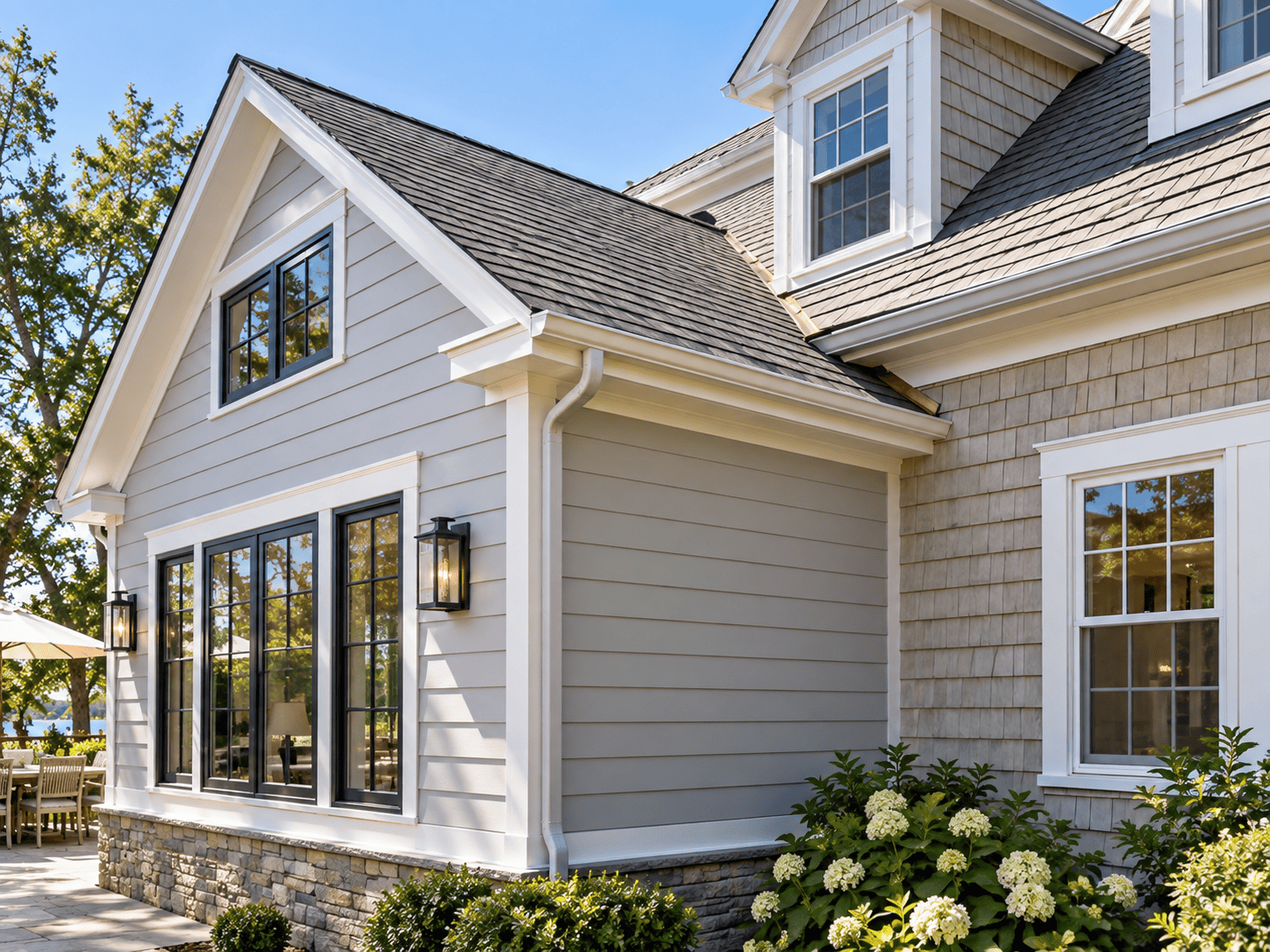
Adding space in Southampton starts with zoning, not framing. Lot coverage, setbacks and, near the water, wetland buffers decide how big an addition can be and where it can go. In Southampton Village, for example, building or enlarging a structure within 150 feet of a wetland or tidal water needs a wetlands special permit before work begins.
Once the size is settled, the job is about matching. Extensions and dormers here often tie into a cedar-shingled wall and roof, so the coursing, trim profiles and roof pitch have to line up with the house you already have. That is finish carpentry, and it is where 40 years at the trade shows.
"We extended the house this past year and met with several contractors. Within minutes we knew that Robert Crouse was the company we were going with. Bob was knowledgeable, took the time to listen and the finished product was perfect. We are very pleased."
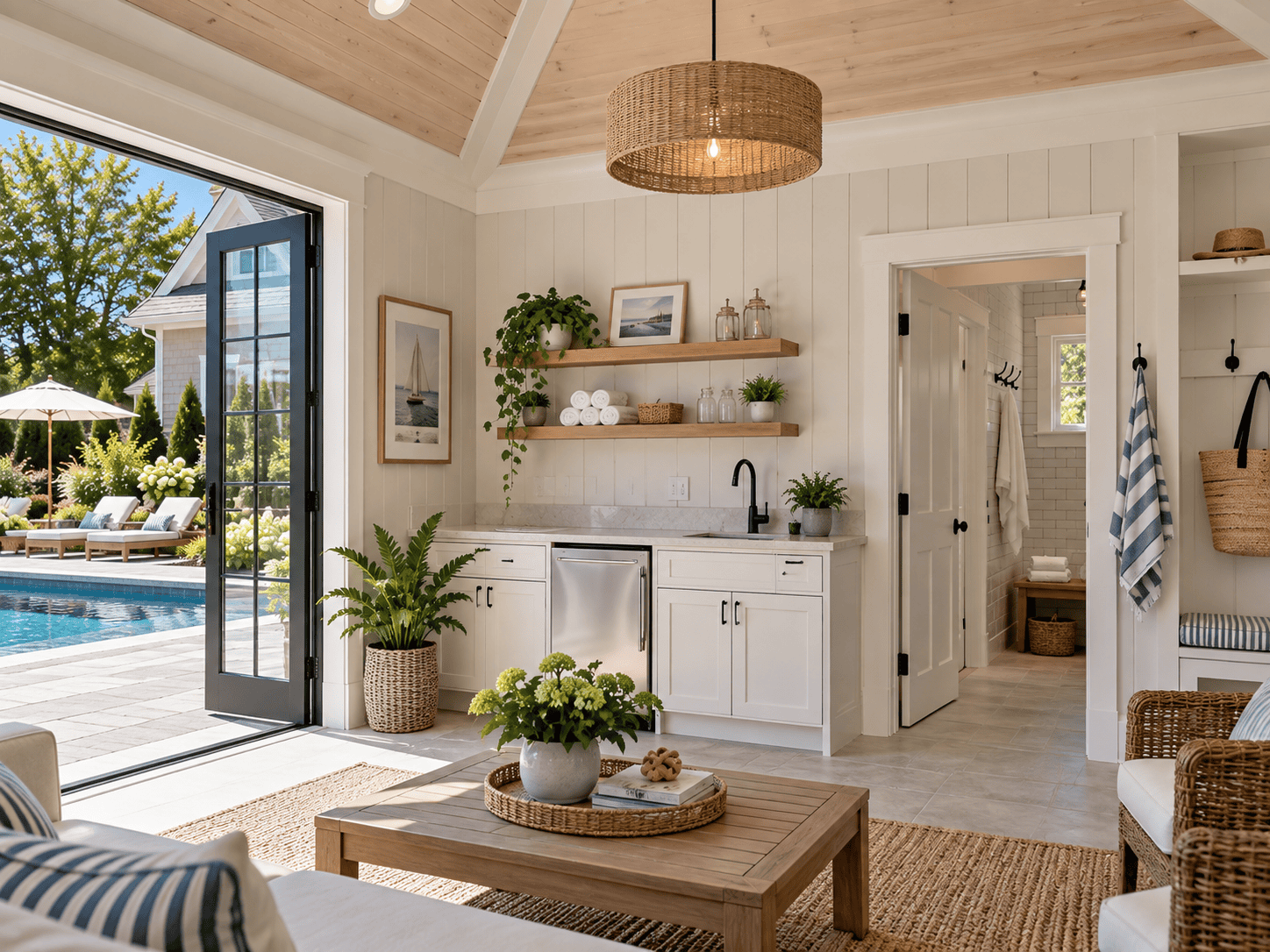
A pool house in Southampton is a building of its own. It needs a permit, it has to meet accessory-structure setbacks, and the rules on bathrooms, outdoor showers and sleeping space differ between the Town and each village. We confirm what your property allows before drawings are made, so you are not redesigning after a review.
Bob builds pool houses with the same detail as the main house: matching siding and trim, doors and windows that hold up to wet feet and summer storms, and a layout that works for changing, storage and shade.

Southampton's exposure is hard on an exterior. The Town's own hazard planning notes that nor'easters have done more damage here than hurricanes, and houses near the ocean and the bays take salt air and wind-driven rain for months at a time. Untreated cedar weathers, cups and splits, and painted wood needs scraping and repainting on a short cycle.
HardiePlank siding is fiber cement. It will not rot, and paint lasts longer on it than on wood. Shingle and lap profiles keep the look of an East End house. The install decides how it performs: flashing at every window and door, the right clearances at the roof and the ground, and fastening suited to a windy site.
In the Southampton Village historic district, any exterior change visible from the street needs a Certificate of Appropriateness from the Board of Architectural Review and Historic Preservation before a permit is issued, and the board weighs texture, materials and color. Westhampton Beach can also refer building applications to its own Architectural Review Board. We plan those reviews into the schedule.

Salt air goes after the parts of a deck you cannot see. Joist hangers, screws and post bases corrode long before the boards look worn, and on a waterfront lot that hardware is what holds the deck to the house. We choose hardware rated for the exposure and flash the ledger where the deck meets the house, because that joint is where deck rot usually starts.
Deck building near the water can also trigger the same wetland and flood-zone review as an addition, especially on bayfront lots in Hampton Bays, East Quogue and Flanders. Bob maps out the layout, the decking and the hardware before work begins, so you know why each material was picked.
From Ronkonkoma, the run east is Sunrise Highway to County Road 39 through Shinnecock Hills, then Montauk Highway through Water Mill and Bridgehampton. We work from Eastport, Speonk and Remsenburg in the west to Sagaponack, Noyac and North Sea in the east, and out along Dune Road on the barrier beach.
Southampton, Quogue, Westhampton Beach, Westhampton Dunes, Sagaponack, North Haven and part of Sag Harbor run their own building departments and boards.
Hampton Bays, Water Mill, Bridgehampton, East Quogue, Flanders, North Sea and the other hamlets go through the Town of Southampton.
Wetland buffers, flood zones and coastal erosion lines add their own reviews, and we check for them before design.
See every town we cover on our Suffolk County service areas page, including neighboring East Hampton and Riverhead.
Bob Crouse has grown this business by word of mouth for more than 40 years, and he treats every renovation like it is his own home. On a house that may sit empty half the year, that matters: you need a builder who explains the plan up front and a crew you will recognize every day. Read more about Bob or see what homeowners say.
Trim, shingle coursing and rooflines are matched by someone who has done it for four decades.
No hand-off to a second crew between the rough work and the finish.
Materials and the order of work are walked through before anything starts.
Monday through Saturday, 8 AM to 5 PM by phone. Emails and messages monitored 24/7.
It depends on the address. The incorporated villages, including Southampton, Quogue, Westhampton Beach, Westhampton Dunes, Sagaponack, North Haven and part of Sag Harbor, run their own building departments and review boards. Hamlets such as Hampton Bays, Water Mill, Bridgehampton, East Quogue and Flanders go through the Town. We confirm which one applies before design starts.
Exterior changes visible from the street in the historic district need a Certificate of Appropriateness from the Board of Architectural Review and Historic Preservation before a permit is issued. The board looks at texture, materials and color, so whether fiber cement is approved on a given house is the board's decision. We build that review into the plan before any material is ordered.
Emails and messages are monitored 24/7, Bob explains the materials and the order of work before anything starts, and the same crew stays on the house from start to finish, so you always know who is on your property.
As early as you can. Permits, review boards and wetland or flood-zone reviews all add time before construction starts. Call in the fall or winter and Bob will give you a realistic timeline for your specific project.
Yes. Robert Crouse Construction works across the whole Town of Southampton, from Eastport, Speonk and Remsenburg in the west to Sagaponack, Noyac and North Sea in the east.
Whether you are in the village, out on Dune Road or up in North Sea, call Bob at 631-443-9319, Monday through Saturday, 8 AM to 5 PM, or send the details below. Emails and messages are monitored 24/7.

Over 40 years of master carpentry and home renovations across Long Island, from Islip to the Hamptons and the North Fork.